Pot smoker of the month
Most Famous Pot Smokers
Some of the world’s most famous celebrities, sports personalities, and politicians all have one thing in common: They’ve been known to enjoy a toke from time to time! Barack Obama, Charlie Sheen, Tim Lincecum, and Oliver Stone are just a few big names that have taken a liking to marijuana. Though some love pot recreationally, other celebrities choose the herb as a safer alternative to prescription medications. For example, former Miami Dolphins running back Ricky Williams prefers marijuana to Paxil for treating his social anxiety disorder. Other famous celebrities have had a direct role in denouncing the vilification of pot, such as Montel Williams, who uses marijuana to treat symptoms of multiple sclerosis. Then there are the celebrities through history… Read More
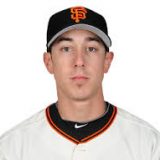
Tim Lincecum
 Told he was too small to succeed in the major leagues, this 175-lb, 29 year old pitcher was the strikeout king of baseball in 2008 and walked away with his second consecutive Cy Young award. He is the only player ever to receive a Cy in his first two years pitching. Currently playing for the San Francisco Giants, winning two World Series, in three years! Teammates consider the smallish right-hander a quirky perfectionist. They also consider him the "Franchise," the nickname they gave him when he broke into the big leagues only a year out of college. Often photographed wearing a hemp necklace, Lincecum has the look of a lanky stoner and the calm personality to match. In October 2009,… Read More
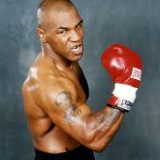
Mike Tyson
Michael Gerard "Mike" Tyson was born in Brooklyn on June 30th, 1966. Now retired, Mike Tyson is a former undisputed heavyweight champion of the world, and holds the record as the youngest boxer to win the WBC, WBA, and the IBF heavyweight titles at 20 years old. He is well known for his ferocious and intimidating boxing style as well as his controversial behavior inside and outside the ring. Tyson is considered one of the best heavyweights of all time. In October of 2000, Mike Tyson tested positive for marijuana following his victory over Andrew Golota. While he refused to take a urine test before the boxing match, Tyson did give a urine sample after the fight. State regulators then… Read More
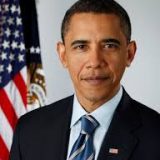
Barack Obama
Barack Obama was born on August 4th, 1961 in Honolulu, Hawaii. He's the first African American to become President of the United States. He's the 44th President of the USA. His mother was Stanley Ann Dunham who was of English ancestry. His father, Barack Obama Sr. was a Luo from Kenya. His parents met in college at the University of Hawaii at Manoa, where his father was a foreign student on scholarship. During his youth, Obama spent a lot of his time smoking marijuana. He smoked frequently with a group of friends who called themselves the "choom gang." The word "choom" is a verb that means "to smoke marijuana." Barack Obama was one of the head members of club. When… Read More
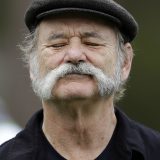
Bill Murray
William James "Bill" Murray was born September 21, 1950 in Wilmette, Illinois. He's a famous American actor and Comedian. He was the fifth of nine children. He started gaining fame from his appearances on Saturday Night Live. This later lead to starring in successful films such as Caddy Shack (1980), Ghost Busters (1984), Groundhog Day (1993) etc. For quite some time Bill Murray was referred to as a "recluse." He became picky about the roles he would accept as an actor and would take a few years off between films. He didn't land as many roles as he could have because he was impossible to get a hold of. He replaced his agent with an automated phone line that he… Read More
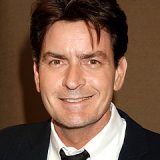
Charlie Sheen
If anybody deserves to be pot smoker of the month, it's Charlie Sheen! Charlie was born on September 3rd, 1965 in New York City. He was born Carlos Irwin Estevez. He's the youngest son of four children. His father, Martin Sheen is also an actor. He has two brothers and one sister. Emilio Estevez, Ramon Estevez and Renee Estevez are actors as well. He came from a family full of talent. A few of his hit films were Red Dawn (1984), Ferris Buellers Day Off (1986), The Three Musketeers (1993) and the television show Two and a Half Men (2003-2011). Sheen's biggest hit was his American television sitcom Two and a Half Men. This sitcom co-starred Jon Cryer and Angus… Read More
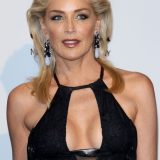
Sharon Stone
Sharon Stone (born Sharon Vonne Stone on March 10, 1958), is an American actress, model (height: 5' 7"), and producer. She came to international attention for her performance in the 1992 blockbuster film Basic Instinct, which caused controversy for its erotic content. She was one of the highest paid actresses in Hollywood in the 1990s, until she moved to San Francisco to live with her husband and raise their adopted son. When that marriage dissolved, Stone returned to Los Angeles and resumed her film career. Stone was born in Meadville, Pennsylvania, USA, a town in which the number-one occupation is milking cows. The second of four children, she is the daughter of Joe and Dorothy Stone, who were blue-collar workers.… Read More
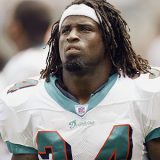
Ricky Williams
Football athlete Ricky Williams was born Errick Lynne Williams, Jr. in May 21, 1977 in San Diego, California. Williams was born to relatively young parents, who ultimately separated when Williams was six years old. Although the mother was awarded custody of Ricky and his siblings, Williams still has a close bond with his father. During his school years, Williams was involved in his school's accelerated program. However, Williams and his twin sister were allegedly victims of racist remarks from other students while growing up. This resulted in accumulated anger, which Williams sometimes vented by playing sports. In San Diego's Patrick Henry High School, Williams primarily played baseball and football, but also ran track and wrestled. On the football field, Ricky… Read More
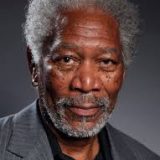
Morgan Freeman
In an April interview with UK newspaper "The Guardian", actor Morgan Freeman explained that he had stopped using cocaine and other "hard drugs" but that he would "never give up on the ganja" Morgan, age 65, has been nominated for three Academy Awards. He called marijuana "God’s own weed" and explained how Moses’ encounter with the "burning bush" was an early Biblical reference to the spiritual benefits of cannabis use. Sadly the reporter didn’t explore Freeman’s pot-based beliefs further, but did add that ganja was clearly "a subject close to his heart". Among other beliefs, Freeman has come out publicly against the celebration of Black History Month and does not participate in any related events, saying, "I don't want a… Read More
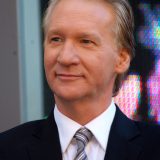
Bill Maher
William "Bill" Maher, Jr. is an American comedian, actor, writer, and producer. Maher was born in New York City and grew up in River Vale, New Jersey. He graduated from Pascack Hills High School in Montvale, New Jersey, which he attended with fellow commentator Keith Olbermann. He received his Bachelor of Arts in English from Cornell University in 1978. Maher began his career as a stand-up comedian hosting the New York City comedy club Catch a Rising Star in 1979. Thanks to Steve Allen, he began appearing on Johnny Carson and David Letterman's shows in 1982. His feature film debut was in D.C. Cab (1983), and he has also appeared in Cannibal Women in the Avocado Jungle of Death (1988)… Read More